Why Your Community May Never See True Fiber: The Calculations Behind the Last-Mile Decision
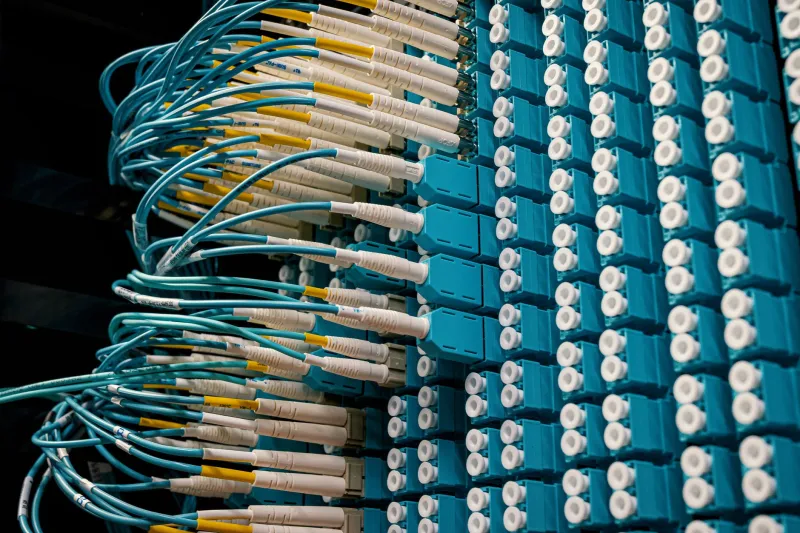
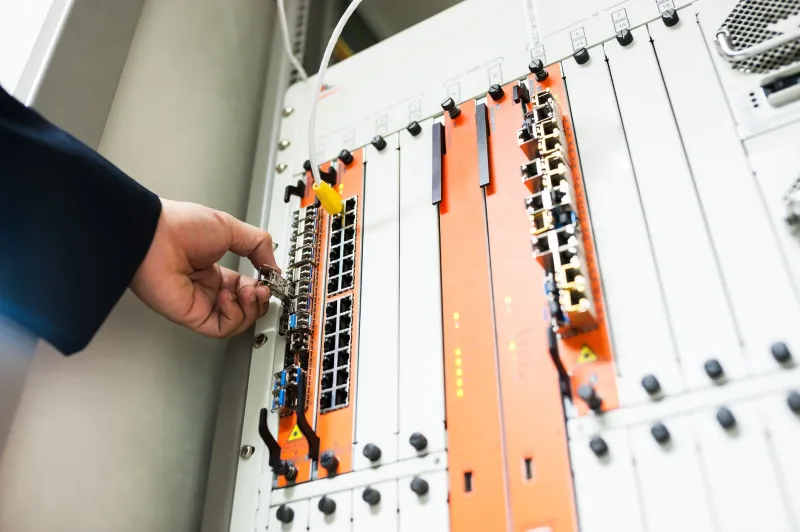
The phrase "fiber-to-the-home" carries a certain promise—a direct, high-capacity optical connection from the carrier's network to the subscriber's premises, capable of delivering symmetrical multi-gigabit speeds with minimal latency and near-unlimited upgrade potential. It is, by most technical assessments, the gold standard of residential broadband infrastructure. It is also an investment that a significant share of American communities will not receive from their incumbent carrier, regardless of how much time passes or how frequently the topic surfaces in policy discussions.
The reasons are not primarily technological. They are financial, regulatory, and structural—and they reveal a set of priorities that frequently diverge from the connectivity needs of the communities in question.
The Build Cost Calculus
Deploying fiber-to-the-home infrastructure requires substantial upfront capital. Industry estimates for greenfield fiber deployment in suburban and rural environments typically range from one thousand to three thousand dollars per passing, with costs rising considerably in areas characterized by low housing density, difficult terrain, or complex permitting environments. In densely populated urban cores, those costs can be partially offset by the volume of potential subscribers within a given geographic footprint. In lower-density markets, the per-subscriber economics deteriorate rapidly.
Incumbent carriers evaluate these deployments against a return-on-investment threshold that accounts for projected subscriber take rates, average revenue per user, competitive intensity, and the expected useful life of the infrastructure. In markets where the projected take rate is modest—a realistic concern in areas with entrenched cable competition or low broadband adoption rates—the financial model for full fiber deployment may not reach internal hurdle rates for capital allocation.
The consequence is a tiering of communities by their perceived investment worthiness. Dense urban neighborhoods with high incomes and active competitive markets receive fiber deployments. Lower-density suburbs and smaller cities may receive partial or phased deployments. Rural areas and small towns are frequently deferred indefinitely.
DOCSIS 3.1 and Fixed Wireless as Calculated Substitutes
Rather than deploying fiber-to-the-home in markets where the economics are unfavorable, incumbent carriers have increasingly turned to two alternative approaches: DOCSIS 3.1 upgrades to existing hybrid fiber-coaxial cable plants, and fixed wireless access using licensed spectrum in the 5G frequency bands.
DOCSIS 3.1, the current generation of the cable modem standard, is capable of delivering download speeds exceeding one gigabit per second over existing coaxial infrastructure. For carriers with substantial cable plant investments, upgrading to DOCSIS 3.1 is significantly less expensive than overbuilding with fiber, because it leverages infrastructure that is already in place and already generating revenue. The upgrade can be accomplished incrementally, on a node-by-node basis, without the full capital commitment of a parallel fiber deployment.
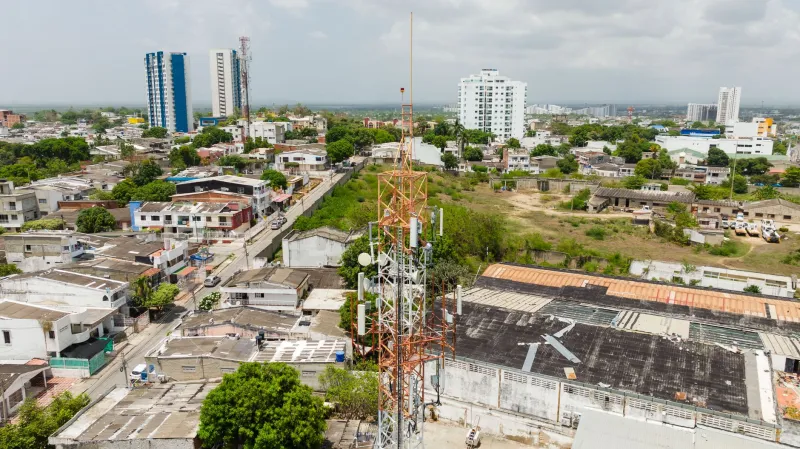
Fixed wireless access presents a different value proposition. By installing small-cell antennas on existing tower infrastructure and providing subscribers with a premises-mounted receiver, carriers can deliver broadband service without running physical cable to each address. In areas where the density of potential subscribers does not justify the trenching, conduit, and drop costs associated with fiber, fixed wireless offers a lower capital intensity path to delivering a serviceable—if not technically equivalent—broadband product.
Both approaches allow carriers to report improved coverage and speed metrics in their regulatory filings and investor communications without committing to the full cost of fiber infrastructure. They also allow those carriers to retain existing subscribers who might otherwise migrate to a competitive fiber provider, at a fraction of the capital required to match that competitor's infrastructure.
The Regulatory Environment and Its Incentive Effects
Federal broadband policy has, historically, defined acceptable broadband at thresholds that incumbent carriers could meet without deploying fiber. The Federal Communications Commission's long-standing 25 Mbps download / 3 Mbps upload benchmark, which defined a location as "served" for subsidy eligibility purposes, was achievable over DOCSIS 3.0 cable or even enhanced DSL in many cases. This created a regulatory environment in which carriers had limited incentive to invest beyond the minimum threshold required to maintain their served status.
The FCC has moved to raise those thresholds, and the Infrastructure Investment and Jobs Act of 2021 established more demanding speed requirements for federally subsidized deployments under the Broadband Equity, Access, and Deployment program. BEAD program rules specify a preference for fiber infrastructure in funded deployments, which has altered the calculus in markets where federal subsidy dollars are available.
However, subsidy availability does not uniformly translate to fiber deployment. Carriers and states are still navigating the administrative and matching fund requirements associated with BEAD, and the program's geographic targeting means that many communities in suburban and exurban areas—too dense to qualify as underserved but too dispersed to attract unsubsidized fiber investment—remain in a coverage gap.
Shareholder Pressure and the Quarterly Horizon
Publicly traded telecommunications carriers operate under the scrutiny of investors who evaluate capital allocation decisions against near-term financial metrics. Fiber-to-the-home deployment is a long-duration investment: the upfront capital is substantial, the payback period extends over years or decades, and the revenue ramp is gradual as subscriber penetration builds.
In an environment where equity analysts and institutional investors emphasize free cash flow generation and return on invested capital, long-duration infrastructure commitments require strong justification. Carriers that have announced aggressive fiber deployment targets have sometimes faced skeptical reactions from analysts concerned about the dilutive effect on near-term cash flow metrics.
This dynamic creates a structural bias toward capital-light alternatives. A fixed wireless deployment that can be brought to market quickly, at lower upfront cost, and with a faster path to positive cash flow contribution may score better against short-term financial metrics than a fiber buildout with superior long-term characteristics. The communities served by those deployments receive a product that is adequate under current conditions but lacks the upgrade potential of fiber—a distinction that will become increasingly consequential as bandwidth demand continues to grow.
The Communities Left Waiting
For residents of communities that fall outside the investment threshold of incumbent carriers, the practical options are limited. Municipal broadband networks and rural electric cooperative fiber deployments have demonstrated that alternative ownership models can deliver fiber to communities that private carriers have declined to serve. Several states have enacted legislation that either facilitates or restricts municipal broadband, and the regulatory landscape varies considerably by state.
The expansion of competitive overbuilders—carriers that deploy fiber specifically in markets underserved by incumbents—has introduced new options in some areas. However, overbuilders face the same density economics that discourage incumbent investment, and their deployments tend to concentrate in areas where the subscriber base is sufficient to support a viable business.
For the communities that remain outside the reach of fiber investment from any source, the gap between the connectivity infrastructure they have and the infrastructure that would best serve their long-term economic and social interests continues to widen. The calculations that determine which communities receive fiber are rational from a carrier financial perspective. From the perspective of the households and businesses on the losing side of those calculations, they represent a structural inequity with consequences that extend well beyond internet speed.