Where You Live Decides What You Get: The Broadband Inequality Baked Into Your ZIP Code
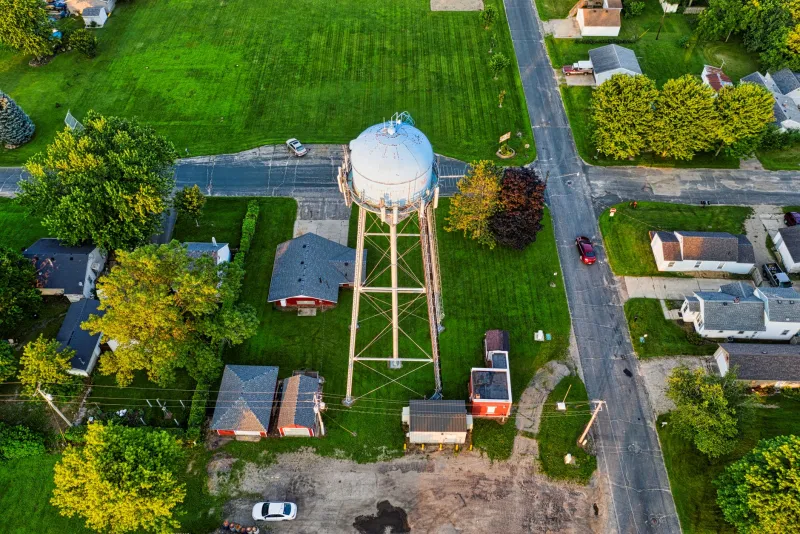
When a family in suburban Columbus, Ohio, streams four simultaneous 4K video feeds without a hiccup while a household twenty miles east struggles to load a single video call, the difference is rarely about the devices they own or the plans they have purchased. It is about the ground beneath their feet — the physical infrastructure, or lack of it, that a provider decided was worth building at some point in the past. Your street address, in the broadband market, is not merely a location. It is a forecast.
This phenomenon — sometimes called the last-mile lottery — describes the wildly inconsistent patchwork of connectivity options that defines American broadband access. Whether you can subscribe to fiber-optic gigabit service, are limited to aging DSL lines, or have no wired option at all depends on a chain of decisions made by private companies, municipal governments, and federal agencies, most of which were never made with your household's needs as the primary consideration.
The Economics Behind the Coverage Map
Internet service providers operate as businesses, and their infrastructure investments reflect that reality. When a carrier evaluates whether to extend fiber to a new area, its analysts weigh the projected number of subscribing households against the capital cost of laying cable, the expected revenue per customer, and the competitive landscape. Dense urban neighborhoods with apartment buildings and high household incomes score favorably on nearly every metric. Sparsely populated rural counties, or even lower-income urban neighborhoods with high renter turnover, frequently do not.
This is not a new dynamic. The telephone network that DSL runs over was itself built according to population density logic, which is why rural DSL — where it exists at all — tends to be slower and less reliable than its urban counterpart. The copper infrastructure it depends upon is older, longer, and more prone to signal degradation over distance. When fiber investment skipped those same communities, the gap widened rather than closed.
What makes the current moment particularly consequential is that the technologies being deployed now — fiber-to-the-premises, fixed wireless access using mid-band spectrum, next-generation cable plant upgrades — will define connectivity for the next two to three decades. Communities that are passed over in this investment cycle are not merely behind today; they risk being structurally disadvantaged well into the 2040s.
How Coverage Data Obscures the Reality on the Ground
Federal broadband maps have historically made the problem harder to see clearly. The Federal Communications Commission's previous methodology allowed a single household with broadband access to designate an entire census block as "served" — a counting approach that dramatically overstated coverage in rural and underserved areas. The FCC's updated fabric-based mapping system, introduced as part of the Broadband DATA Act, represents a meaningful improvement, but challenges remain.
Consumers who believe their address is incorrectly characterized on the national broadband map can — and should — submit challenges directly through the FCC's public portal. These challenges carry weight. They feed into the datasets used to allocate billions of dollars in federal funding through programs like the Broadband Equity, Access, and Deployment (BEAD) initiative, which directs money toward genuinely unserved and underserved locations. An unchallenged inaccuracy on a federal map is not a bureaucratic abstraction; it is a funding decision that affects your community.
The Regulatory Levers Available to Consumers
Beyond federal map challenges, consumers have several underutilized avenues for applying pressure at the state level. Most states maintain a public utility commission or a broadband office with authority to investigate service complaints and, in some cases, compel providers to meet minimum service standards. Filing a formal complaint — as opposed to calling a provider's customer service line — creates a documented record that regulators can aggregate to identify systemic underservice patterns.
State broadband offices, many of which have been significantly expanded with federal funding since 2021, are also responsible for administering BEAD grant allocations. Residents, local governments, and community organizations can participate in public comment processes that shape which areas are prioritized for subsidized deployment. Showing up to those processes, in writing or in person, matters more than most consumers realize.
Local government engagement is another lever worth pulling. Municipal broadband networks — publicly owned internet utilities operated by city or county governments — have demonstrated consistent success in markets where private providers declined to invest. Communities in Chattanooga, Tennessee; Wilson, North Carolina; and numerous smaller municipalities across the rural South and Midwest have built competitive fiber networks that serve residents at speeds and prices the private market was unwilling to offer. These projects typically require sustained advocacy from residents to gain political traction, but they represent one of the most reliable paths to genuine connectivity parity.
Community Organizing as Infrastructure Strategy
One of the more counterintuitive insights from successful rural broadband campaigns is that the organizing work often matters as much as the technical work. Providers evaluating whether to extend service to a new area pay attention to demonstrated demand. Petition drives, coordinated requests submitted through a provider's official service inquiry process, and organized attendance at town hall meetings all contribute to the evidence base that a community represents a viable market.
Cooperative models offer another pathway. Rural electric cooperatives, which were themselves created in the 1930s to deliver electricity to areas private utilities refused to serve, have increasingly moved into broadband deployment. When a community can organize around a cooperative structure, it gains the ability to pursue financing and grants that are unavailable to individual households acting alone.
The nonprofit sector has also become an important player. Digital equity organizations in states including Minnesota, Kentucky, and New Mexico have developed technical assistance programs that help rural counties navigate the grant application process, conduct community needs assessments, and evaluate technology options suited to their geography.
What You Can Do Starting This Week
The path from frustration to action does not require waiting for a federal program or a municipal initiative to materialize. Several immediate steps can move the needle.
First, verify how your address appears on the FCC's national broadband map at broadbandmap.fcc.gov. If the listed speeds or technologies are inaccurate, submit a location challenge. The process takes approximately ten minutes and contributes directly to funding allocation decisions.
Second, identify your state's broadband office or public utility commission and review its complaint submission process. A formal complaint, even if it does not resolve your individual situation immediately, creates a data point that regulators use to identify patterns of underservice.
Third, connect with your local government. County commissioners, city council members, and rural electric cooperative boards are often receptive to constituent pressure on broadband issues, particularly when federal funding is available and the political will is the limiting factor rather than money.
The broadband map of the United States is not fixed. It is redrawn constantly by investment decisions, regulatory actions, and community organizing — and the version that exists a decade from now will reflect, in part, whether the people currently underserved chose to engage with those processes or wait for someone else to solve the problem. Your address may determine your current options. It does not have to determine your future ones.