Same Street, Different Century: The Infrastructure Decisions That Divide Neighbors Online
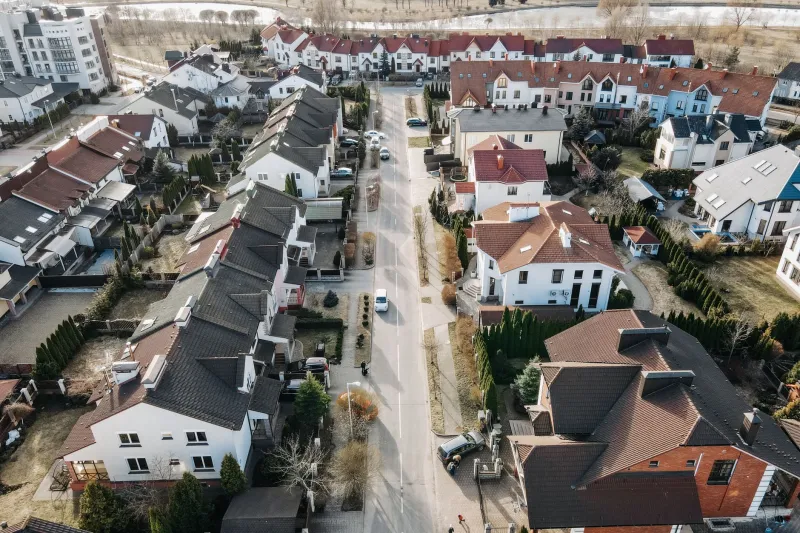
Imagine two households separated by nothing more than a shared fence. One subscribes to a symmetrical gigabit fiber connection, streaming 4K video and running a home office without interruption. The other makes do with aging DSL infrastructure that struggles to clear 10 Mbps during peak evening hours. Same street. Same zip code. Worlds apart.
This is not an anomaly. It is, in fact, the predictable outcome of decades of infrastructure investment decisions made by private companies operating under frameworks that prioritize financial return over geographic equity. Understanding why this happens — and what homeowners can realistically do about it — requires looking beyond the marketing materials and into the mechanics of broadband deployment.
The Economics of Deployment: Why Providers Cherry-Pick Blocks
Fiber optic infrastructure is expensive to install. Trenching, conduit, splice enclosures, and optical network terminals all carry substantial upfront costs that providers must eventually recover through subscriber fees. The fundamental calculation is straightforward: the more potential customers per mile of fiber laid, the faster that investment pays off.
This logic drives providers toward higher-density residential corridors — newer subdivisions with uniform lot sizes, apartment complexes, and mixed-use developments where a single run of fiber can serve dozens of units. Older neighborhoods with irregular lot sizes, mature tree canopies that complicate aerial deployment, or lower homeownership rates often fall to the bottom of the buildout priority list.
The result is what industry analysts sometimes call the "deployment gradient" — a sliding scale of connectivity quality that correlates not with demand, but with the ease and profitability of serving a given area. A neighborhood built in 1958 with half-acre lots may sit directly adjacent to a 2005 subdivision that received fiber service in its first year of occupancy.
Franchise Agreements and Municipal Influence
Beyond pure economics, the regulatory landscape introduces another layer of complexity. Broadband providers in many states negotiate franchise agreements with municipalities that define service territories, infrastructure obligations, and sometimes build-out timelines. The specifics of these agreements vary enormously across jurisdictions.
In cities where municipal governments negotiated aggressively — demanding that providers serve defined percentages of their territory within set timeframes — residents generally enjoy more consistent access across neighborhoods. In cities where agreements were looser, or where providers successfully lobbied for minimal obligations, the deployment patchwork tends to be far more pronounced.
Some municipalities have responded to persistent gaps by launching their own broadband utilities or partnering with cooperative providers. These efforts have produced measurable results in communities ranging from Chattanooga, Tennessee, to Wilson, North Carolina. However, at least eighteen states maintain laws that restrict or outright prohibit municipal broadband operations, often the result of sustained lobbying by incumbent providers seeking to protect their market position.
The Stranded Investment Problem
In many cases, the obstacle is not an absence of infrastructure but rather the presence of the wrong kind. Telephone companies deployed copper DSL networks across wide swaths of the country during the 1990s and early 2000s. That infrastructure, while technically functional, represents a stranded investment — it cannot economically support the speeds modern users require, but its existence can paradoxically discourage new fiber investment.
Providers who already own copper networks in a given territory face a difficult internal accounting question: why spend capital to overbuild your own infrastructure when the existing network continues to generate revenue, however modest? This dynamic has allowed DSL service to persist in areas where fiber deployment would be technically feasible, simply because the incumbent carrier has little financial incentive to accelerate its own obsolescence.
What Homeowners Can Actually Do
The options available to a household stuck on inferior service depend heavily on local circumstances, but several avenues are worth pursuing systematically.
Document and report your situation. The Federal Communications Commission maintains the National Broadband Map, which tracks reported service availability by address. If your address is incorrectly shown as having access to services you cannot actually obtain, filing a challenge with the FCC is both straightforward and consequential — inaccurate map data directly influences how federal broadband funding is allocated.
Engage your local government. City council members and county commissioners frequently have more leverage over provider deployment decisions than residents realize, particularly in communities with active franchise renegotiations on the horizon. Organized constituent pressure has historically been one of the more effective tools for accelerating buildout commitments.
Investigate competitive alternatives. Fixed wireless access, delivered via tower-mounted radio equipment, has matured considerably in recent years and now serves as a genuine fiber alternative in many suburban and exurban markets. Satellite broadband options have also expanded, though latency characteristics remain a consideration for latency-sensitive applications.
Coordinate with neighbors. Providers sometimes respond to organized demand. A petition signed by a cluster of households representing a critical mass of potential subscribers can shift a neighborhood from the "future consideration" column to the active deployment queue — particularly if it coincides with a provider's scheduled infrastructure work in an adjacent area.
The Broader Implication
The arbitrary nature of last-mile deployment decisions carries consequences that extend well beyond streaming quality. Home values, remote work viability, telehealth access, and educational opportunity all correlate meaningfully with connection quality. When the digital divide runs not between rural and urban areas but between adjacent properties in the same neighborhood, it underscores a structural problem that market forces alone have consistently failed to resolve.
Broadband infrastructure, at its core, functions more like a utility than a consumer product. The policy frameworks governing its deployment are slowly beginning to reflect that reality — but the pace of change has not kept up with the scale of the disparity. Until it does, the connectivity lottery will continue to produce winners and losers determined less by need than by the accident of where a property line happens to fall.