Fiber at the Curb, Cable in the Living Room: The Upgrade Gap ISPs Don't Advertise

Announcements of fiber expansion have become a staple of telecom press releases. Carriers trumpet billions of dollars in planned infrastructure investment, and local governments celebrate the ribbon-cuttings that follow. Yet for a significant share of American households, those announcements translate to nothing more than a construction crew working on the opposite side of the street. The fiber is there. The speed is there. The upgrade, however, is not.
Understanding why requires looking past the marketing language and into the financial architecture that governs how internet service providers make deployment decisions—and, more critically, how they decide which customers receive the benefits first.
What Fiber Deployment Actually Means
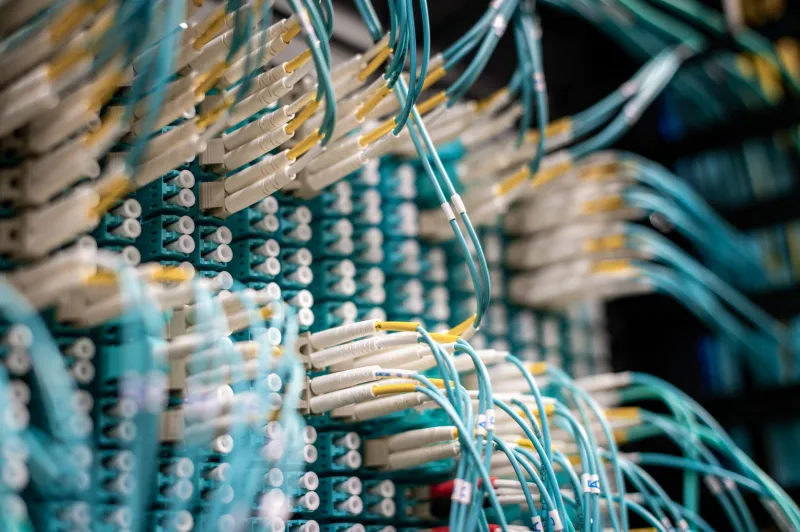
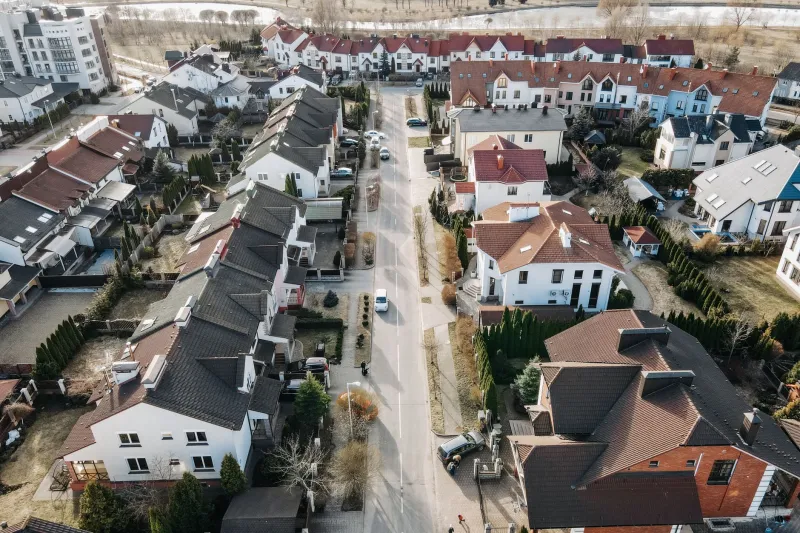
When an ISP announces that it has "passed" a certain number of homes with fiber, it is describing a network construction milestone, not a service delivery milestone. Passing a home means the fiber infrastructure exists in proximity—typically in conduit beneath the street or on utility poles along the block. It does not mean a fiber drop has been connected to the structure, nor that the homeowner has been offered a fiber service tier.
The distinction matters enormously. In industry parlance, a home that has been passed is a potential subscriber. Converting that potential subscriber into an active one requires a separate investment: the installation of a fiber drop line from the distribution point to the premises, the placement of an optical network terminal at the home, and the provisioning of a new account. That last-segment cost—commonly referred to as the drop cost—can range from several hundred to over a thousand dollars per address, depending on the distance, terrain, and permitting requirements involved.
ISPs are, therefore, making two separate decisions: where to build the backbone infrastructure, and which specific addresses to actually connect.
The Economics of Selective Upgrades
Competition, not altruism, is the primary engine driving fiber deployment in most American cities. When a new competitive provider enters a market—or when an incumbent detects credible signals that one intends to—existing carriers accelerate their own fiber buildouts in targeted areas. This dynamic, sometimes called a "fiber war," concentrates infrastructure investment in zones where subscriber churn risk is highest.
The consequence is a patchwork deployment pattern that does not follow the logical geography of a city. Neighborhoods with higher household incomes, denser populations, or greater concentrations of competing service options tend to receive fiber upgrades earlier and more aggressively. Older residential areas, apartment complexes with existing bulk service contracts, or blocks where the incumbent faces little competitive pressure may see fiber pass nearby without ever receiving a meaningful upgrade offer.
Existing cable customers, paradoxically, are often the last to benefit. An ISP that has already locked a customer into a cable subscription has reduced incentive to immediately cannibalize that revenue stream by offering a superior product at the same or lower price. The customer is, in financial terms, already captured. Resources are more efficiently directed toward winning new subscribers or preventing defection to a rival.
Legacy Network Maintenance and the Sunk Cost Trap
Another factor slowing the transition from coaxial to fiber is the ongoing cost of maintaining legacy cable infrastructure. Hybrid fiber-coaxial networks—the architecture underlying most cable internet service in the United States—represent decades of capital investment. The amplifiers, nodes, splitters, and headend equipment that comprise these networks require continuous maintenance, periodic replacement, and ongoing operational expenditure.
Writing off that infrastructure prematurely would require carriers to accelerate depreciation on assets that still generate substantial revenue. Shareholders and analysts scrutinize capital allocation decisions closely, and the financial case for maintaining a functioning, revenue-producing network alongside a parallel fiber buildout is often more compelling than an immediate wholesale transition.
This creates a structural inertia. The more a carrier has invested in its existing cable plant, the more organizational and financial resistance exists to abandoning it quickly. The result is a prolonged coexistence period during which some customers receive fiber service and others, sometimes on adjacent streets, continue to receive cable—often at comparable price points despite the significant difference in underlying infrastructure quality.
How Addresses Get Prioritized
The criteria ISPs use to sequence address-level fiber upgrades are rarely disclosed publicly, but several factors consistently emerge from industry analysis and regulatory filings. Subscriber density is paramount: deploying fiber across a block where eighty percent of units are already subscribers offers a far better return than deploying across a block with low existing penetration.
Competitive proximity is equally significant. Addresses within a defined radius of a competitor's active fiber network receive elevated priority, as the risk of subscriber loss is most acute in those zones. Commercial corridors and mixed-use developments often receive accelerated treatment because business accounts generate higher average revenue per user.
Conversely, addresses in single-family residential areas with long drop distances, complex permitting environments, or existing long-term service contracts may languish in a deployment queue indefinitely. The fiber may reach the node at the end of the block, but the individual connection to each home waits until the economics become sufficiently favorable—a threshold that, for some addresses, may never arrive under current market conditions.
What This Means for Consumers
For households currently on cable plans, the practical implication is that proximity to fiber infrastructure does not confer any automatic right to access it. Availability must be confirmed at the specific service address, and even confirmed availability does not guarantee competitive pricing or transparent upgrade pathways.
Consumers who wish to understand their options should request a formal service availability check from all licensed providers at their specific address—not their ZIP code or neighborhood. They should also inquire directly about any planned deployment timelines for their address, as some carriers maintain customer-facing tools or customer service pathways through which deployment schedules can be accessed.
In markets where municipal broadband or cooperative fiber networks are present, those entities frequently operate under different prioritization frameworks than investor-owned carriers, often deploying to underserved addresses more systematically. Awareness of those alternatives is a meaningful asset in navigating the upgrade gap.
The fiber paradox is, at its core, a market structure problem. Infrastructure investment follows competitive and financial logic, not geographic equity. Until the incentive structure changes—through competition, regulation, or public investment—the gap between fiber at the curb and fiber in the living room will remain a persistent feature of the American broadband landscape.