Seeds, Sensors, and Signals: The Quiet Broadband Revolution Reshaping American Farmland
For generations, American agriculture has been defined by physical labor, seasonal rhythms, and hard-won instinct. Today, a different kind of resource is quietly redefining what it means to run a successful farm operation — and it travels at the speed of light through fiber-optic cables and wireless towers increasingly planted across rural America.
High-speed internet connectivity is transforming the agricultural sector from the ground up, enabling a new class of data-driven, technology-empowered farmers who are producing more with less, managing risk more intelligently, and connecting their operations to global markets in ways that were unimaginable just a decade ago.
Precision Agriculture: When Data Becomes the Harvest
The concept of precision agriculture — using real-time data to make highly targeted decisions about planting, irrigation, fertilization, and pest management — has existed in theory for years. What has changed dramatically is the infrastructure required to make it work at scale.
Modern precision farming relies on a dense network of Internet of Things (IoT) sensors embedded throughout fields, monitoring everything from soil moisture levels and nutrient concentrations to microclimatic temperature variations. These sensors generate continuous streams of data that must be transmitted reliably to cloud-based analytics platforms, often in near real time.
Without a stable, high-bandwidth connection, that data pipeline breaks down. A soil sensor that cannot transmit its readings is little more than an expensive piece of hardware buried in the ground. It is reliable rural broadband that transforms these devices from isolated instruments into components of a living, responsive agricultural intelligence network.
Farmers who have adopted precision agriculture report meaningful reductions in input costs — water consumption, fertilizer application, and pesticide use — while simultaneously improving yields. The economics are compelling, but they are entirely dependent on connectivity.
Remote Equipment Management and the Connected Tractor
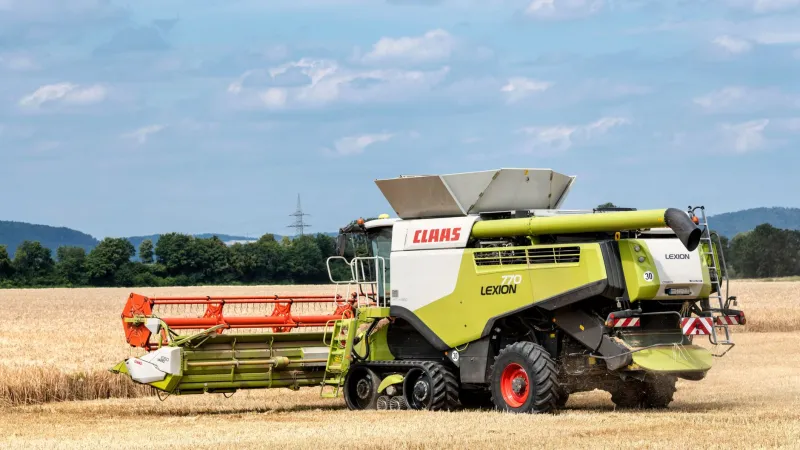
Modern agricultural machinery has evolved into sophisticated computing platforms on wheels. Today's combines, planters, and sprayers are equipped with onboard GPS systems, automated steering, variable-rate application technology, and remote diagnostics capabilities that allow equipment manufacturers and farm operators to monitor performance data from anywhere in the country.
This remote management capability carries enormous practical value. Equipment failures during planting or harvest windows can be catastrophic — every idle hour translates directly into financial loss. With reliable broadband access, a farmer in central Iowa can receive an alert about an emerging mechanical issue, share diagnostic data with a dealer's technician in real time, and potentially resolve the problem before it becomes a full breakdown.
Some of the largest agricultural equipment manufacturers have built entire service ecosystems around this connectivity model. The assumption embedded in every software update and every remote diagnostic tool is that the farm has a dependable internet connection. For producers in well-served areas, this assumption holds. For those in persistent broadband dead zones, it does not.
The Digital Divide Is Still a Rural Reality
Despite genuine progress, the United States has not yet solved its rural connectivity challenge. According to data from the Federal Communications Commission, millions of Americans living in rural areas still lack access to broadband service that meets basic speed thresholds — and the actual coverage gaps are widely believed to be larger than official figures suggest, due to longstanding methodological limitations in how coverage is measured and reported.
For farming communities, this gap carries consequences that extend well beyond inconvenience. Producers without reliable internet access cannot fully participate in digital commodity trading platforms, cannot leverage precision agriculture tools, cannot access real-time weather modeling services, and cannot take advantage of the remote monitoring systems that increasingly define operational efficiency in the industry.
There is also a generational dimension to this challenge. Younger agricultural professionals who have grown up with digital tools and expect seamless connectivity are making location decisions — about where to farm, where to live, and where to invest — partly on the basis of broadband availability. Rural communities that cannot offer competitive connectivity risk losing the next generation of agricultural talent to areas where the digital infrastructure exists.
Federal Investment and the Road Ahead
The federal government has recognized rural broadband as a strategic priority, directing substantial funding through programs such as the USDA's ReConnect Program and the broader provisions of the Infrastructure Investment and Jobs Act toward expanding high-speed access in underserved communities. These investments are beginning to move the needle, with new fiber deployments, fixed wireless installations, and emerging satellite broadband technologies extending service to areas that were previously considered economically unviable to serve.
Satellite-based broadband, in particular, has emerged as a meaningful option for farms in remote locations where ground-based infrastructure buildout remains years away. While latency characteristics and data capacity constraints mean satellite connections are not equivalent to fiber for every application, they represent a genuine improvement over the near-total absence of connectivity that many rural producers have historically endured.
The agricultural sector itself has become an increasingly vocal advocate for rural broadband investment, with farm bureaus, commodity organizations, and rural electric cooperatives pushing at the state and federal level for policies that accelerate deployment and close coverage gaps.
Connectivity as Agricultural Infrastructure
It is worth reframing how policymakers, infrastructure providers, and the public think about rural broadband. For much of the twentieth century, rural electrification was understood as a foundational public investment — not a luxury, but a prerequisite for economic participation and national productivity. The Rural Electrification Administration, established in the 1930s, transformed American agriculture by bringing power to farms that the private market had bypassed.
The parallels to today's broadband challenge are difficult to ignore. High-speed internet has become, for the modern farm operation, what electricity was to the mid-century farmer: a utility without which the tools of the era simply cannot function.
At OA Internet Services, we understand that connectivity is not merely a consumer product — it is infrastructure. Powering digital capabilities from coast to coast means recognizing that some of the most consequential connections we can help establish are not in urban data centers or suburban neighborhoods, but in the fields, valleys, and plains where American agriculture is quietly undergoing its most significant transformation in generations.
The seeds of that transformation have already been planted. Whether they reach full harvest depends, in no small part, on whether the signal reaches the farm.